
Germany’s Tuition-Free Promise Is Real (With One Catch)
Germany’s public universities think TU Munich, RWTH Aachen, Humboldt University of Berlin, University of Hamburg, and hundreds of others – charge no tuition fees for Bachelor’s, Master’s, and even PhD programs. This applies to international students too, not just German or EU nationals. The only recurring cost is a modest semester contribution, typically between €150 and €400, which usually covers administrative services and even a public transport pass. The one notable exception is Baden-Württemberg, where non-EU students pay roughly €1,500 per semester — still far below tuition at most universities abroad. So where’s the catch? It’s not financial. It’s linguistic. While Germany does offer a growing number of English-taught Master’s programs, the vast majority of Bachelor’s degrees and many of the most prestigious and in-demand Master’s programs — are taught in German. To even be considered for admission, universities typically require proof of German proficiency at B1 or B2 level on the Common European Framework of Reference (CEFR), usually demonstrated through a recognized test like the TestDaF, DSH, or Goethe-Institut certificate. In other words: your ticket to zero tuition is written in German.Why B1/B2, Specifically?
B1 marks the point where you can handle everyday academic and social situations independently — following lectures on familiar topics, writing simple essays, holding conversations without constant hesitation. B2 pushes further into fluency: understanding complex texts, participating in seminar discussions, and writing structured academic work. Universities set the bar here because German-taught degree programs move fast. Professors won’t slow down lectures, textbooks won’t come with translations, and group projects assume you can hold your own in discussion. B1/B2 is the threshold at which the university is confident you can actually survive — and thrive — in that environment. The good news? This isn’t a fluency-for-life requirement. It’s a well-defined, testable, coachable milestone. With focused, structured learning, most students can move from zero German to a confident B1/B2 in 9 to 12 months — sometimes faster with intensive study.The Real Bottleneck Isn’t the Language – It’s the Learning Path
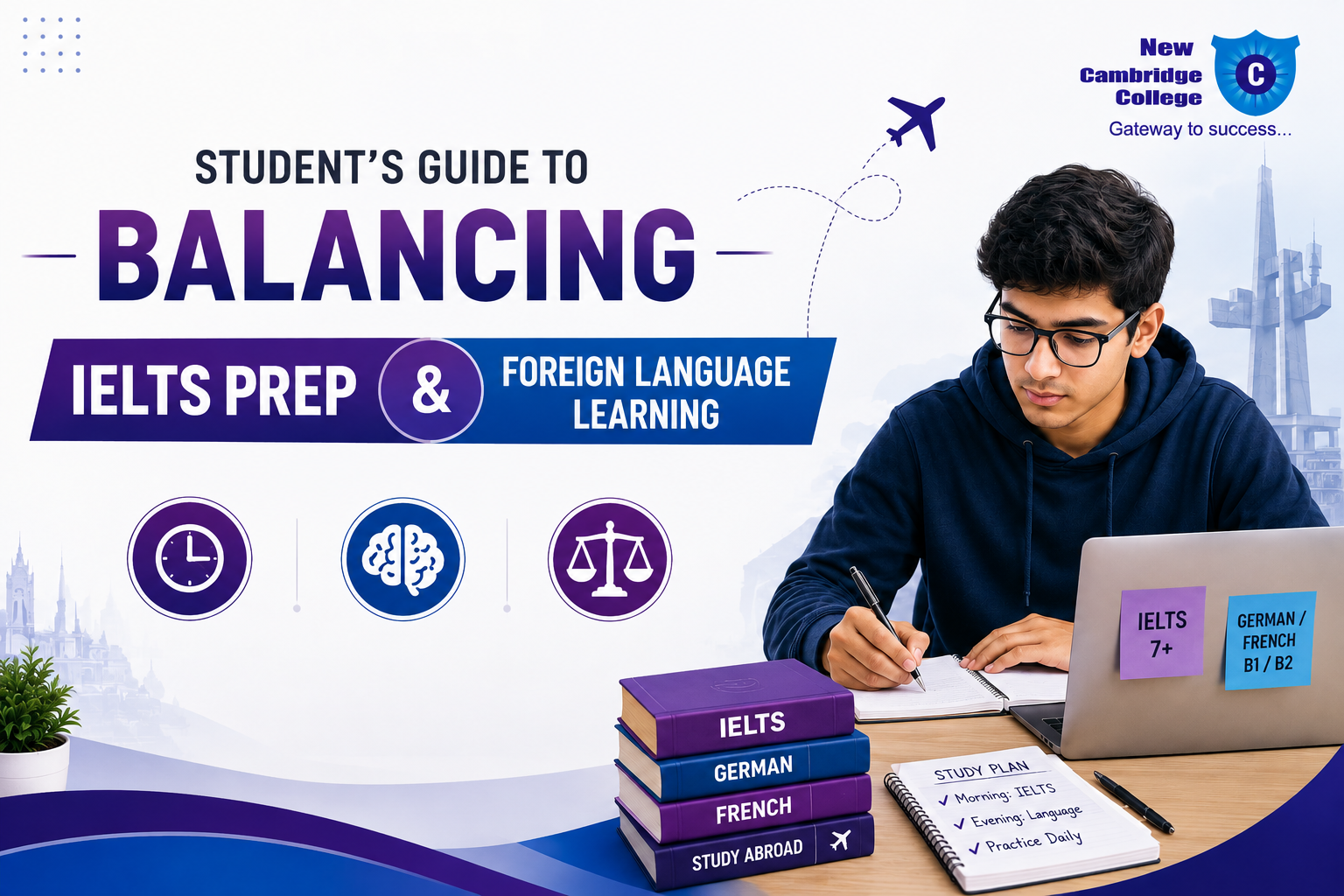
Here’s what trips most students up: self-study apps and generic language courses are built for tourists and hobbyists, not for university-bound learners racing against an admissions deadline. They teach vocabulary for ordering coffee, not for writing a Motivationsschreiben (motivation letter) or passing a TestDaF exam. This is exactly where structured, exam-focused coaching makes the difference between a wasted year and a tuition-free acceptance letter. At New Cambridge College, German language coaching is built specifically around the real finish line: getting students to a certified B1 or B2 level, on a timeline that matches university application deadlines, with training that mirrors actual academic and exam contexts — not just conversational small talk. That distinction matters enormously when every month of delay is a month closer to missing an intake.What Structured Coaching Actually Adds
A good coaching program does more than teach grammar. It should give you:- A clear roadmap from A1 to B1/B2, with realistic timelines tied to your target intake (usually Winter Semester in October or Summer Semester in April).
- Exam-specific preparation for TestDaF, Goethe-Zertifikat, or telc exams, since universities accept different certificates depending on the program.
- University and program shortlisting based on your field of study, so your language learning is paired with a realistic admissions strategy — not happening in a vacuum.
- Application support, including document preparation, APS certification (for some countries), and Uni-Assist submissions, so your hard-earned B1/B2 certificate actually converts into an acceptance letter.
A Realistic Timeline to Zero Tuition
For a student starting from scratch, here’s roughly what the journey looks like:- Months 1–4: Build foundational German (A1–A2) — grammar basics, everyday vocabulary, simple conversation.
- Months 5–8: Progress to B1, focusing on academic vocabulary, structured writing, and listening comprehension for lecture-style content.
- Months 9–12: Reach B2 (if required), sit for a certified exam like TestDaF, and simultaneously shortlist universities and prepare application documents.
- Month 12+: Apply to tuition-free public universities, submit language certificates, and secure your offer letter for the next intake.