What is the new TOEFL scoring scale introduced in January 2026?
Effective January 21, 2026, ETS introduced a new 1–6 scoring scale for TOEFL in half-point increments, aligned to the CEFR (Common European Framework of Reference for Languages). All four sections — Reading, Listening, Speaking and Writing — are scored on this scale. The overall score is the average of all four section scores. During a two-year transition period until January 2028, score reports also include the comparable legacy 0–120 score. Tests taken before January 21, 2026 remain on the 0–120 scale.
What is a good TOEFL score for US universities on the new 1–6 scale?
On the new 1–6 scale, a score of 5.5 to 6.0 (equivalent to 107–120 on the legacy scale) is considered excellent and meets or exceeds the requirements of top US universities including MIT, Harvard, Stanford and all Ivy League institutions. A score of 5.0 (approximately 95+ on the legacy scale) meets the requirements of most mid-to-top-ranked US universities. New Cambridge College advises on target scores based on each student’s specific university shortlist.
What is a TOEFL score of 5.0 equivalent to on the old 0–120 scale?
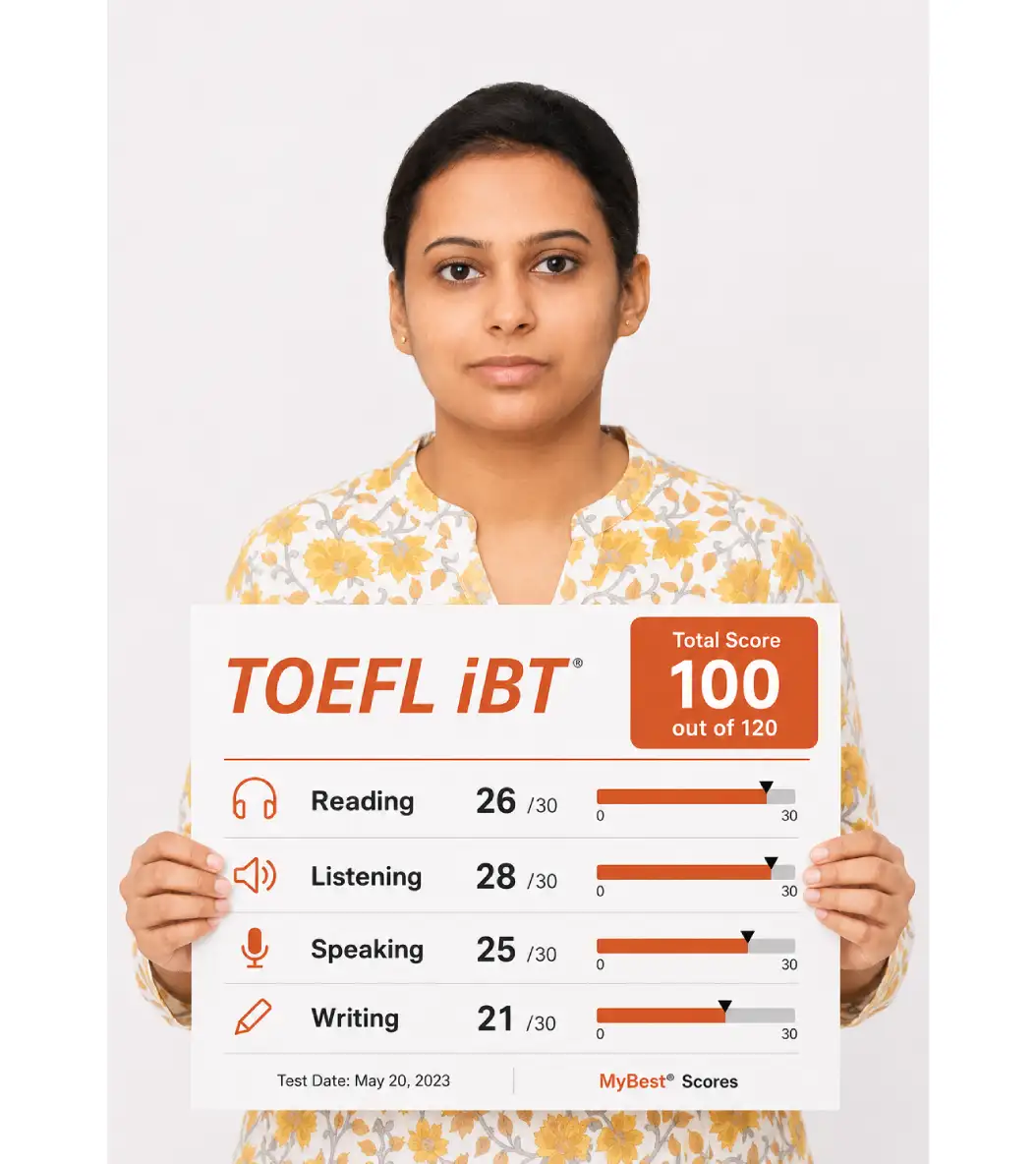
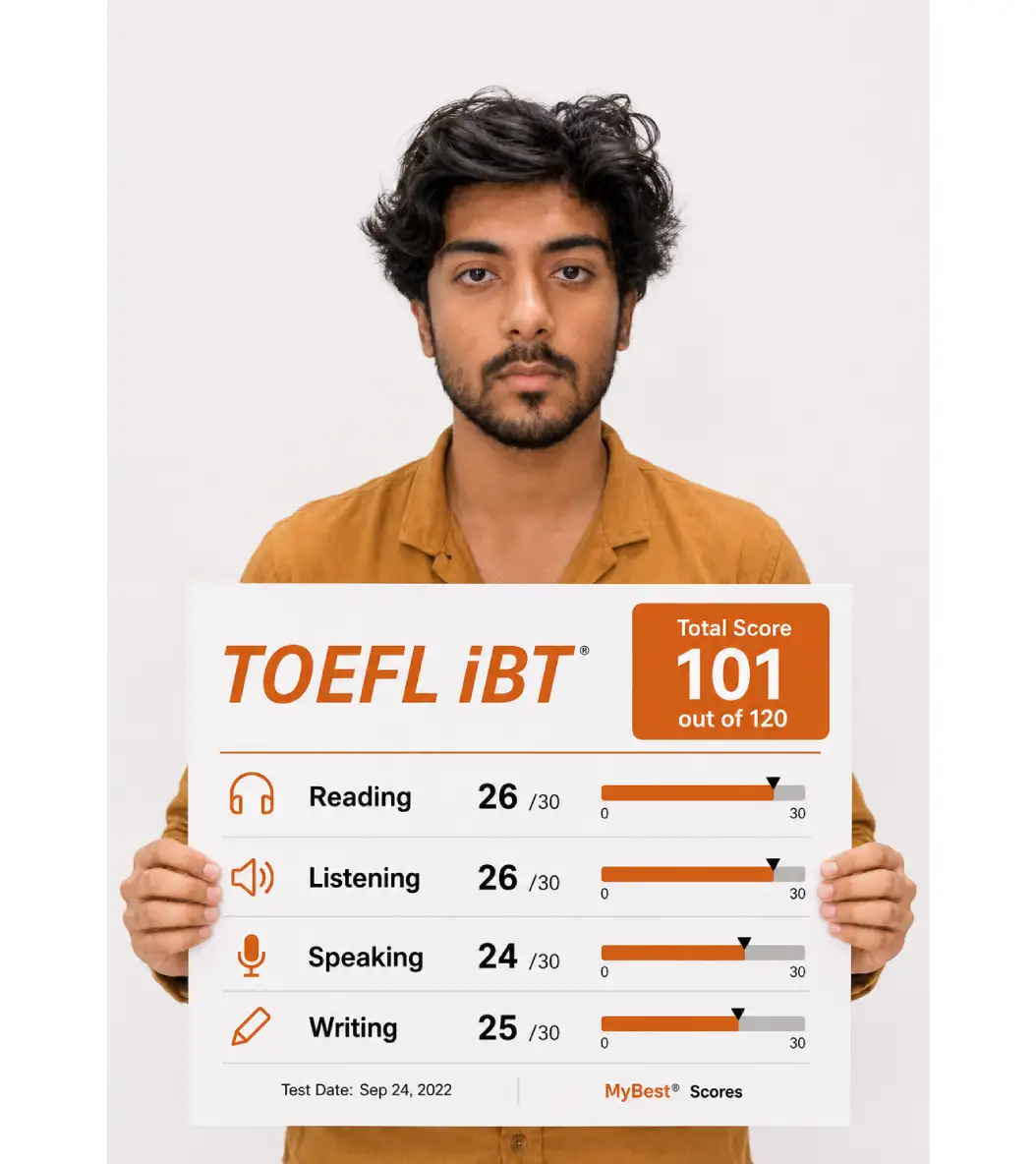
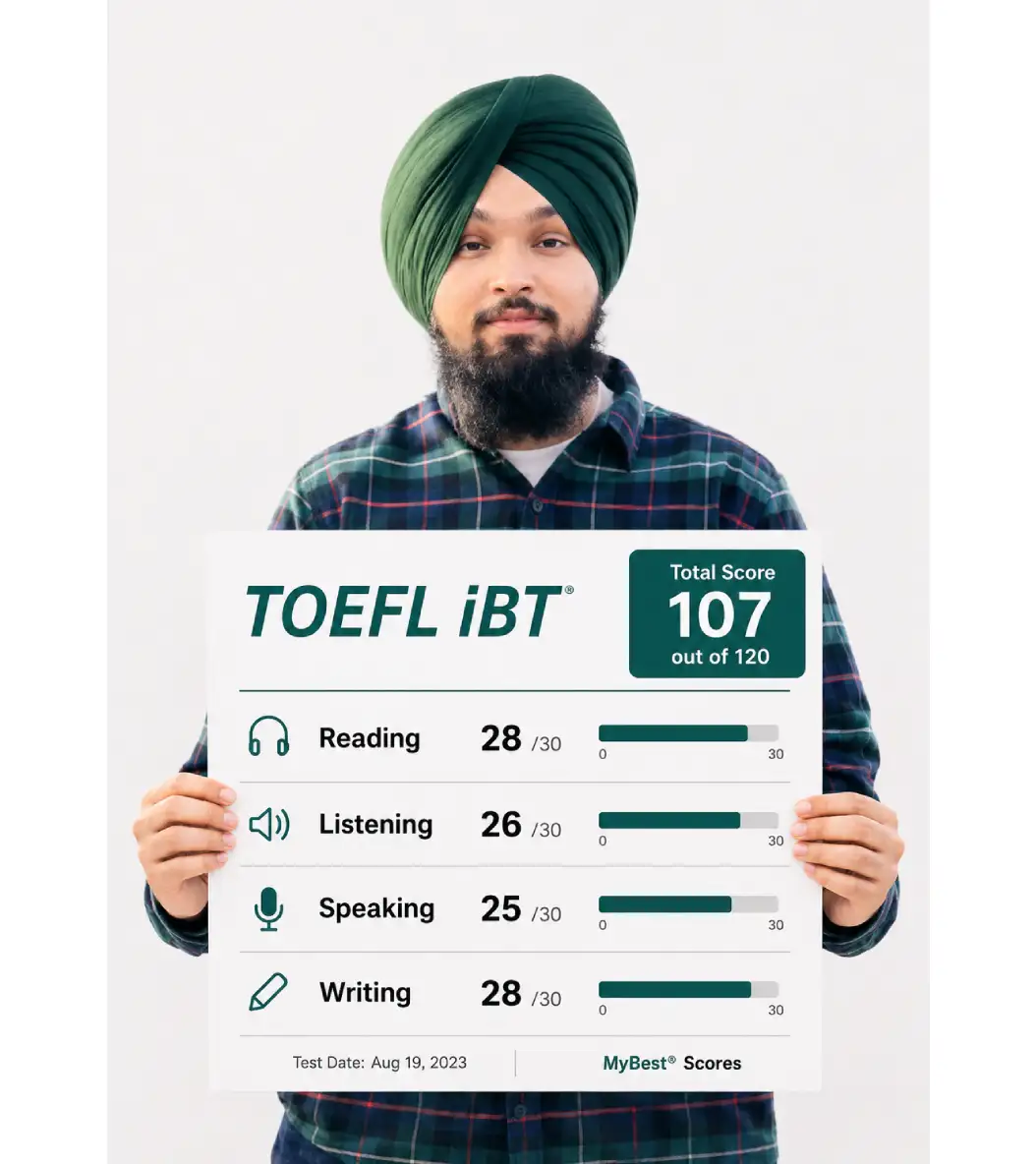
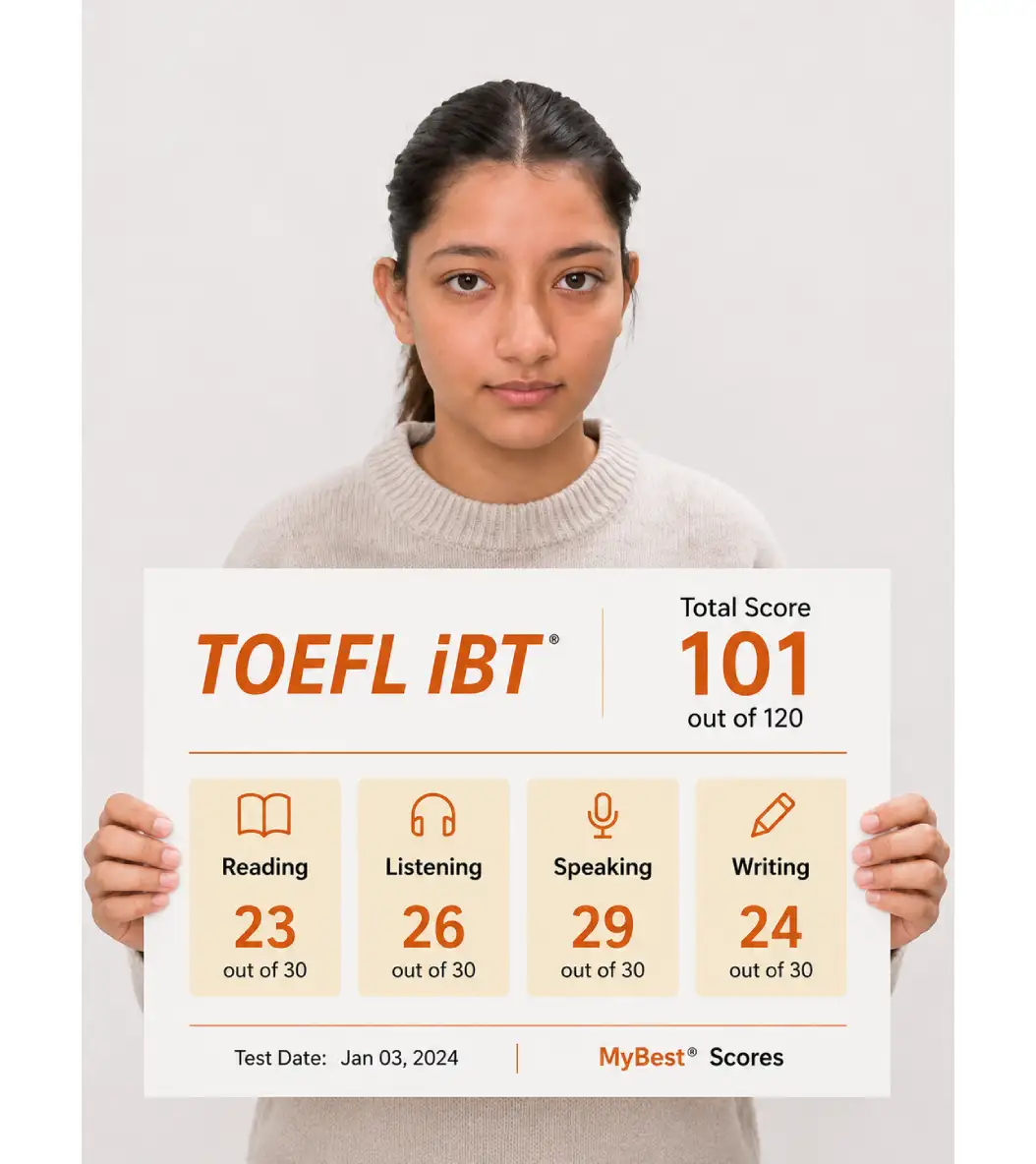
A TOEFL score of 5.0 on the new 1–6 scale is equivalent to approximately 95 or above on the legacy 0–120 scale. It represents strong academic English proficiency (CEFR C1 level) and meets the minimum requirements of most mid-to-top-ranked universities globally. Section-wise equivalency: Reading 24–26, Listening 22–25, Speaking 25–26, Writing 24–26 on the legacy 0–30 section scales.
How long is TOEFL valid after the January 2026 scoring change?
TOEFL scores remain valid for 2 years from the test date regardless of which scoring scale is used. Scores from tests taken before January 21, 2026 on the 0–120 scale are valid for 2 years from the original test date. Scores from tests taken on or after January 21, 2026 on the new 1–6 scale are similarly valid for 2 years.
Is TOEFL iBT accepted in Canada for immigration (IRCC) on the new scale?
Yes. TOEFL is accepted under Canada’s Immigration, Refugees and Citizenship Canada (IRCC) for several immigration pathways including Express Entry. During the transition period (2026–2028), IRCC will accept both the new 1–6 scale and the legacy 0–120 scale on score reports. New Cambridge College advises students on current IRCC TOEFL requirements at the time of their application.
What is the TOEFL exam fee in India?
The TOEFL iBT exam fee is USD 190 (approximately INR 15,500–16,000) plus applicable GST. New Cambridge College is an authorised ETS TOEFL examination booking centre and may offer exclusive discounts for enrolled students. Contact New Cambridge College at +91-9878-222-772 for the latest fee information and booking assistance.
How many times can I take the TOEFL iBT?
You can take the TOEFL iBT once every 3 days, up to 5 times per year. There is no lifetime limit on the number of attempts. ETS MyBest Scores allows universities to see your best section scores across multiple test dates — check whether your target university accepts MyBest Scores before deciding whether to retake.
Is TOEFL or IELTS better for Canadian universities and immigration?
Both TOEFL iBT and IELTS are accepted by Canadian universities for admissions. For Canadian Permanent Residency through Express Entry and most immigration pathways, IRCC accepts both IELTS General Training and TOEFL iBT. However, IELTS is more commonly requested by Canadian immigration applicants. New Cambridge College provides coaching for both TOEFL iBT and IELTS and will advise on the best choice based on your target universities and immigration plans.
What is the best TOEFL coaching institute in Chandigarh?
New Cambridge College at SCO 80-81-82, Sector 17D, Chandigarh is widely regarded as the best TOEFL coaching institute in the Chandigarh tricity. With over 15 years of experience, an authorised ETS examination booking centre status, fully updated coaching for the January 2026 scoring changes and proven scores including 113, 118 and above, New Cambridge College is the trusted choice for students from Chandigarh, Mohali, Panchkula, Ludhiana, Jalandhar and Amritsar.